
Sales intelligence platforms for CPG brands: a buyer's guide
What these tools read, why a brand selling through UNFI, KeHE, or DSD needs the kind that watches its own accounts, and eight questions to ask in a demo.

By Christopher Kong / October 8, 2026 / 12 min read
Sales intelligence tools do one of two jobs. Some help you find buyers you've never sold to, like ZoomInfo and Apollo. Others watch the accounts you already have by reading your distributor depletions, retailer portals, and rep spreadsheets, and they tell you which stores are slowing down. If you sell through UNFI, KeHE, or direct-store-delivery (DSD) distributors, start with the second job.
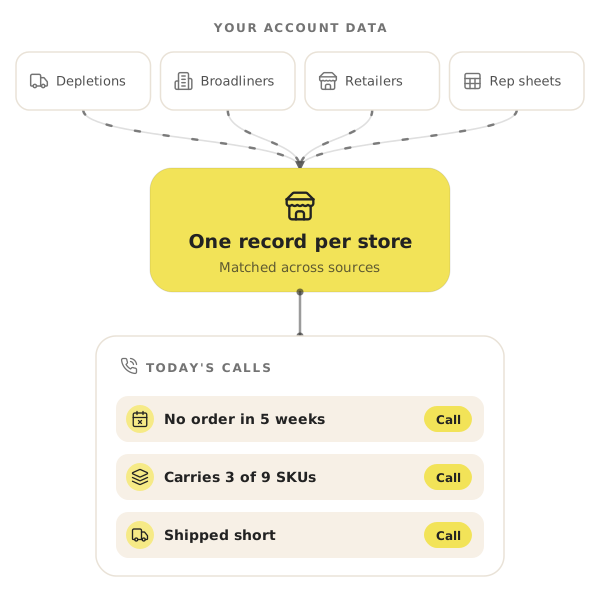
Search for "sales intelligence platform" and you'll get long lists of tools, mostly written by the companies that sell them. Nearly all of them cover the first job. That's fair enough if you sell software to other businesses, but it won't help much if you run sales at a CPG brand.
I learned this the hard way at Better Nature. We scaled to roughly 5,000 stores across six countries. The question that kept me up at night was never "who do I call at a chain we're not in yet?" It was "which of the stores we're already in has quietly stopped reordering?" Most of the time I found out weeks too late, from a rep visit or a distributor report that landed after the shelf space had gone to someone else.
What does a sales intelligence platform do?
A sales intelligence platform collects data about companies and buyers, then tells your sales team who to contact and what to say. Most tools in the category run on the same inputs: contact details, company information (often called firmographics), signs that a company is researching a purchase (buyer intent), and updates to your CRM, like Salesforce or HubSpot.
That's the first job, finding people at companies you've never sold to. The second job is knowing what's happening inside the accounts you already have. Almost every tool in the category is built for the first one.
Two terms help keep them apart. A prospecting database sells access to contact and company records, so your reps can reach people they don't know yet. ZoomInfo, Apollo, Cognism, and Lusha all work this way. Account signals are changes in how an existing customer is buying, like an order that didn't arrive, a product that left the shelf, or a delivery that came in short.
Sales intelligence also gets mixed up with three other kinds of tools. A CRM stores your contacts, deals, and notes. A sales engagement tool sends your email sequences. And a conversation intelligence tool like Gong records your sales calls and analyzes them.
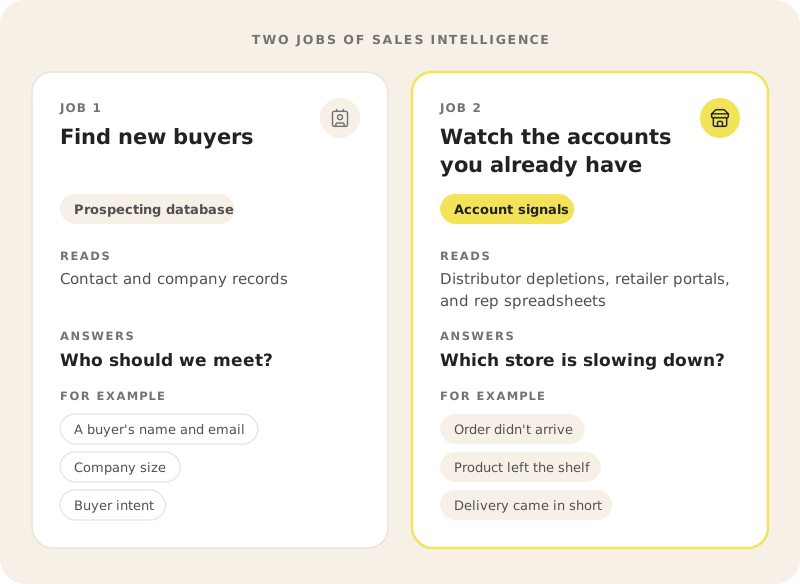
Most sales intelligence platforms do the first job. A CPG brand selling through distributors mostly needs the second.
Why CPG is different: you already know your accounts
If you sell through distributors and retailers, you already know who your accounts are. You know which chains carry you, which DSD houses deliver you, and which UNFI and KeHE warehouses ship you. What you don't know on a Monday morning is which of those accounts is slowing down, and a contact database can't tell you, because that information sits with your distributors and retailers.
That's true whether you sell through wholesalers, broadliners like UNFI and KeHE, or DSD distributors, since in every case the store's sales data lives in someone else's system. It matters less for your own online store. And if you're still looking for your first retail buyers, a contact database is exactly what you need (I cover when that's the case in the section on prospecting databases).
Where a CPG brand's data lives
Distributor depletions show what a distributor sold to stores, which is a different number from what you shipped to the distributor. CLEAN Cause gets its DSD depletions every day through VIP. The UNFI and KeHE portals report weekly, retailer portals report on their own schedule, and reps keep their own notes in shared spreadsheets.
Each of those sources uses a different name for the same store. At CLEAN Cause, KeHE calls a chain an "area name" and VIP calls it an "immediate owner." When a store moves from one distributor to another, it can look like a lost customer in one report and a brand-new one in the next, which means nobody can say which accounts are at risk until the names are matched.
How CLEAN Cause uses this data
CLEAN Cause sells organic energy drinks through about thirty DSD distributors, dozens of UNFI and KeHE warehouses, and retailers including Whole Foods and HEB. Its data came from eight sources, each in its own format, and two regional distributors sent their reports as email attachments.
On Corvera, nearly 8,000 stores were matched across those sources, so a store that changes distributor keeps one record. Reports that used to be rebuilt every month now update every day.
Jon Sowers, their VP of Sales, built a daily dashboard on top of it. It shows which accounts to call and what to ask for, puts a dollar value on each risk and opportunity, and flags products missing from stores in chains CLEAN Cause already sells to. It flagged $250K of sales opportunities.
Todd Bondy, CLEAN Cause's CEO, put the problem better than I can: "Data isn't our constraint. We have more data than we know what to do with. Putting it in usable formats in order to drive actions is the constraint."
You can read the full story in how CLEAN Cause runs its daily call list.
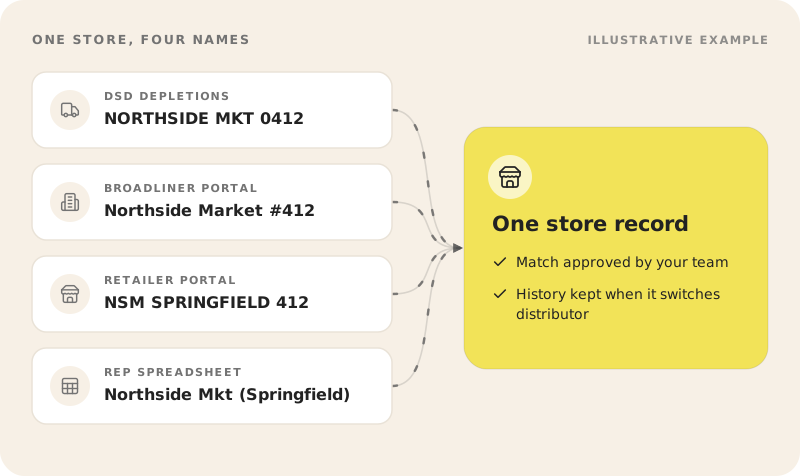
A CPG brand's accounts are known, but each feed names them differently, so the first job of sales intelligence for a brand is matching them.
What a CPG brand needs from a sales intelligence platform
Most buyer's guides judge these tools on data accuracy, privacy compliance (GDPR), and how well they sync with your CRM. Those matter for a contact database. For a brand selling through distributors, I'd ask something simpler: can the tool tell you something new about a store you already sell to? I'd check five things in a demo.
It connects to your distributor and portal data
Ask which data sources it connects to today, by name. That means VIP or direct distributor depletions, the UNFI and KeHE portals, your retailer portals, and your rep spreadsheets. A tool that only reads your CRM can only see what your team typed in, so your distributors' numbers never reach it.
It keeps one record per store
Every source names stores differently. If a store that switches distributor shows up as a lost customer, your lost-account numbers will be wrong and your reps will chase stores that never left. Ask how the tool matches stores across sources, who approves the matches, and whether the store's history moves with it. On Corvera, this matching happens in the context layer, and your team approves each match.
It shows changes at store and product level
Useful signals are specific, like a store that hasn't ordered in five weeks, a chain that carries three of your nine SKUs, or a warehouse that shipped fewer cases than were ordered. A monthly report tends to surface these after the shelf space is gone. You want them daily, while your rep still has time to act.
It tells your reps who to call first
Hand a rep a list of four hundred slowing stores and they'll do what I did at Better Nature. They'll pick the handful they recognize and hope the rest are fine. What works is a short list of today's most important calls, each with the reason and what to ask for, so a rep can get through it the same day.
Your team approves what goes out
Some tools draft messages for your team, such as a brief for the rep, an email to the buyer, or a follow-up to the distributor. Ask who approves each one before it's sent, and where that approval is recorded. On Corvera, scheduled agents draft these messages, and your team approves the store matches they're based on. There's more on how that works in sales intelligence for CPG sales teams.
FAQ
What is the difference between sales intelligence and a CRM?
A CRM stores your own records: the contacts, deals, and notes your team enters. A sales intelligence platform brings in data from outside, either contact data on new buyers or sales data on existing accounts, and tells you where to focus. Most teams use both.
What is the best sales intelligence platform for a CPG brand?
It depends on the job. If you need to reach retail or foodservice buyers you've never met, a contact database like ZoomInfo or Apollo works well. If you need to see which of your current stores and distributors are slowing down, you need a tool that reads depletions and retailer portal data. Of course I'm biased, but for brands selling through UNFI, KeHE, and DSD, that second kind is usually the bigger gap.
What data does a CPG sales intelligence platform need?
It needs the data your accounts already produce: distributor depletions (often through VIP for DSD), the UNFI and KeHE portals, retailer portals, rep spreadsheets, and your own shipment records. Then it has to match each store across all of them, because every source uses its own store names and reporting dates.
Is syndicated data (NielsenIQ, SPINS, Circana) sales intelligence?
Not in the way I'm using the term here. NielsenIQ, SPINS, and Circana measure category and brand sales across retailers, so you can see market share and trends. That's useful for category reviews, but it's usually not detailed or fast enough to tell a rep which store to call today.
How long does it take to set up?
It depends on how many data sources you have and how messy the store names are. At CLEAN Cause, five distributor depletion feeds were live within a day, and the full setup took a few days. Whoever you're talking to, ask how many sources and stores were in a recent setup like yours.
Sales intelligence platforms compared
Most buyer's guides compare tools one by one. For a CPG brand, I think it's more useful to start with the data each type of tool reads, because that decides whether it can see your accounts at all. Corvera is in the last row (and yes, we're the ones publishing this guide).
| Type of tool | What it reads | Choose it when |
|---|---|---|
| Contact databases (ZoomInfo, Apollo, Cognism, Lusha) | Contact and company records | You need to reach buyers you don't know yet |
| Intent and account-based marketing tools (6sense, Demandbase, Bombora) | Online research and engagement signals | You target a set list of companies that don't know you yet |
| Conversation intelligence (Gong) | Recorded sales calls | You want to learn from your sales calls |
| Retail data platforms (Crisp) | Retailer and distributor data, with analytics and forecasting on top | You want retail data cleaned and sent into the tools you already use |
| Account signals on your own sales data (Corvera) | Distributor depletions and portal data, matched store by store | You know your accounts and need to know which ones to call today |
The first three rows follow the categories ZoomInfo uses in its own guide to sales intelligence tools, with intent and account-based marketing combined into one row. A lot of the guides you'll find for this search come from companies in those three rows, and for finding new B2B buyers their picks are reasonable.
Retail data platforms are closer to what a CPG brand needs. Crisp, for example, says its platform will "automate the flow of data from retailers and distributors into your tool of choice," and it also sells retail analytics, forecasting, and AI agents. Corvera reads the same kinds of data, matches every store across sources, and gives each rep a list of today's calls with what to ask for. If you're comparing tools in the last two rows, run the eight questions at the end of this guide against your own accounts.
Syndicated data from NielsenIQ, SPINS, and Circana isn't in the table. It shows market share and category trends rather than what's happening in a single store, and it's most useful for category management.
When a prospecting database is still the right choice
A contact database is the right call when the account you need doesn't know you yet. That's the brand opening its first regional chain and needing the buyer's name, or the one moving into foodservice and looking for the right category manager at the distributor. It's also the brand entering a new state with a broker who doesn't cover every chain there. Your depletion data can't help with any of that, because those stores have never ordered from you.
We used one at Better Nature to get in front of buyers at chains we weren't in yet, and it did that job well.
One buyer's guide, from AlphaRun, tells readers to avoid sales intelligence tools entirely if they "sell through existing relationships." That's good advice if sales intelligence only means a prospecting database. But a CPG brand selling through distributors is exactly that kind of company, and it's the one that needs the other kind of tool most.
Plenty of brands need both, because they answer different questions: who should we meet, and which account is slowing down? I'd start with whichever one you can't answer today.
Questions to ask before you buy
Before your first demo, list the data sources you have today and who owns each one: distributor depletions (VIP or direct), UNFI and KeHE portal access, retailer portals, and rep spreadsheets. With that list in hand, any vendor worth your time can answer all eight of these in the demo.
- Which of my data sources do you connect to today? Ask for names. "We integrate with everything" isn't an answer.
- How do you match the same store across sources, and who approves the matches? Look for automatic matching that your team reviews and approves.
- What does a rep see on Monday morning? Ask to see the actual screen or email.
- How fresh is the data? Daily depletions belong in front of your reps the next morning.
- What happens when a store moves to a new distributor? It keeps its history and shows up as one account.
- Can we ask questions of our own data? For example, in plain English through Claude, or by exporting it.
- How long does setup take, and what do you need from us? Ask how many sources and stores were in a recent setup like yours.
- Who on our team will maintain it? If the answer is a data analyst you don't have, the tool hasn't solved the problem.
For a CPG brand, sales intelligence starts with the accounts you already sell to, because that's where your data already is. The test I'd hold every tool to is whether it can tell you which store to call today. If you sell through distributors and this has sparked your interest, grab 30 minutes on my calendar and I'll show you what that looks like!
Sources
- Corvera, "CLEAN Cause runs and enhances its daily sales decisions on Corvera" (Christopher Kong, August 18, 2026)
- ZoomInfo, "Sales Intelligence Tools: 11 Best Platforms Compared (2026)"
- AlphaRun, "Sales Intelligence Tools: 20 Best Options Tested in 2026"
- Crisp, homepage
- Corvera, "The AI sales agent for CPG brands"
People also read
The AI sales agent for CPG brands
The AI sales agent for CPG brands. Sales intelligence on the accounts you sell to and a daily brief your reps act on, from distributor and retailer data.
Win back the accounts that stopped ordering
Corvera flags every account that stopped ordering, ranks it by what it used to buy, rules out distributor switches and drafts the follow-up.
Close distribution gaps on your core SKUs
Corvera checks every store against the core SKUs it should carry, ranks each gap by what it is worth, and drafts the ask for the rep, broker or buyer.
Turn retailer portal data into today's calls
Corvera signs in to your retailer and distributor portals, pulls each report as it publishes, maps every store to one record and ranks what to act on.
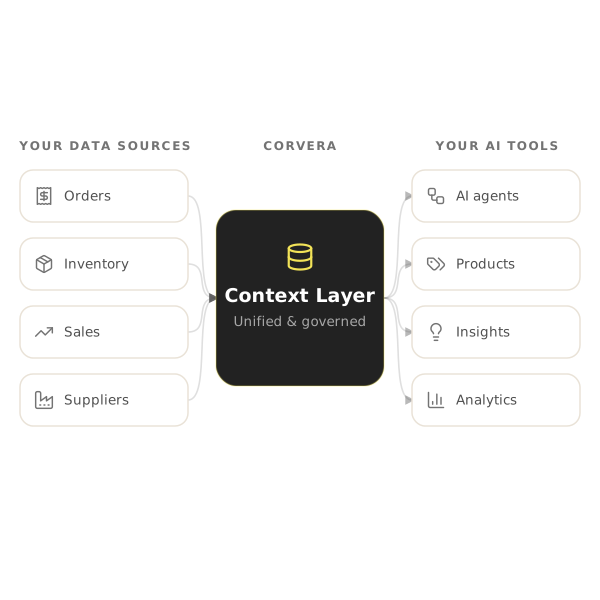
The Corvera platform
How the AI sales agent and the context layer under it fit together.
Christopher Kong · Co-Founder & CEO, Corvera
Chris is the Co-Founder and CEO of Corvera. He works closely with consumer brand operators on the numbers their businesses actually run on: sell-through, category performance, cash, and more. He writes about category management and cash flow for CPG operators.