
Blog
We write guides and explainers on the context layer, MCP and putting AI to work across a CPG brand.
GTIN vs UPC vs EAN vs ASIN: product identifiers, mapped
GTIN vs UPC vs EAN vs ASIN: who assigns each product code, where you'll see it, and how to match retailer and distributor codes back to one GTIN.
How to prepare a category review buyers actually act on
How to prepare a category review buyers actually act on: eight steps, the data to bring, and why buyers ignore most category review decks.
Revenue growth management (RGM) in CPG: a practical guide for brands
A practical guide to revenue growth management (RGM) for CPG brands: the five pillars, the data each needs, and where to start without an RGM team.
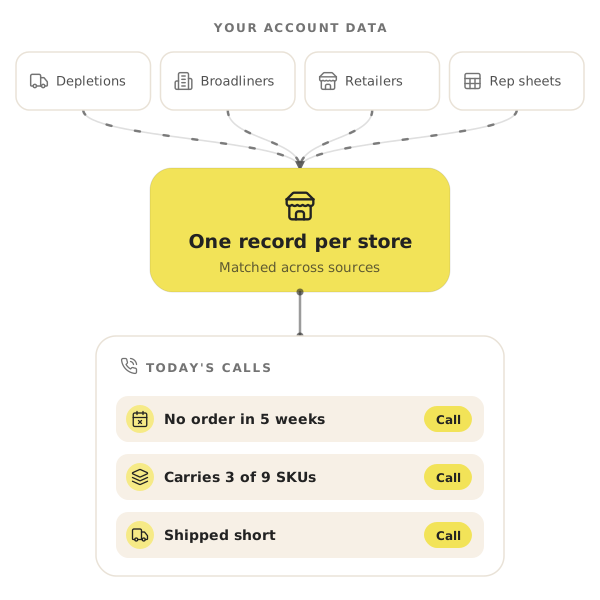
Sales intelligence platforms for CPG brands: a buyer's guide
A buyer's guide to sales intelligence platforms for CPG brands: prospecting databases vs. account signals, what to check in a demo, and eight questions to ask.
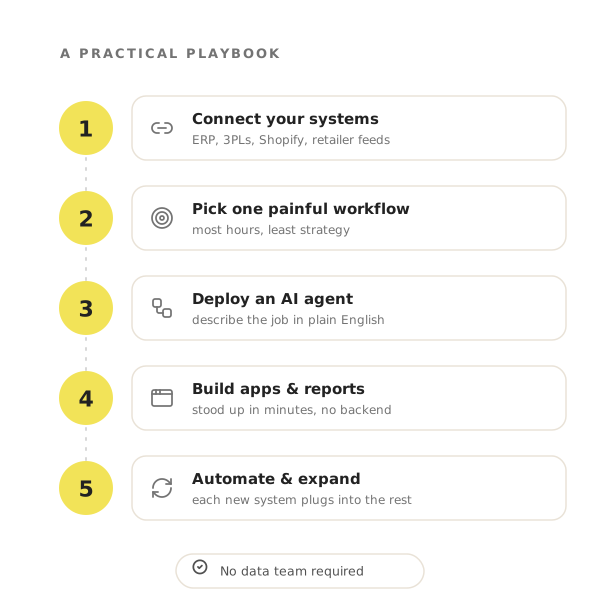
How to Use AI in CPG Operations Without a Data Team
You don't need a data team to use AI in CPG operations. Here's a practical playbook: connect your data through a context layer, then put agents and automations to work on it.
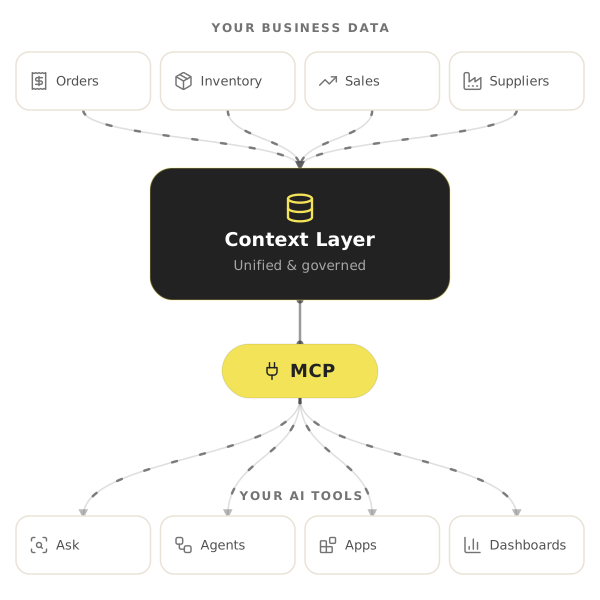
MCP for CPG Brands: How the Model Context Protocol Connects AI to Your Data
MCP (the Model Context Protocol) is the open standard for connecting AI tools to your data. Here's how it works and why it matters for CPG brands.
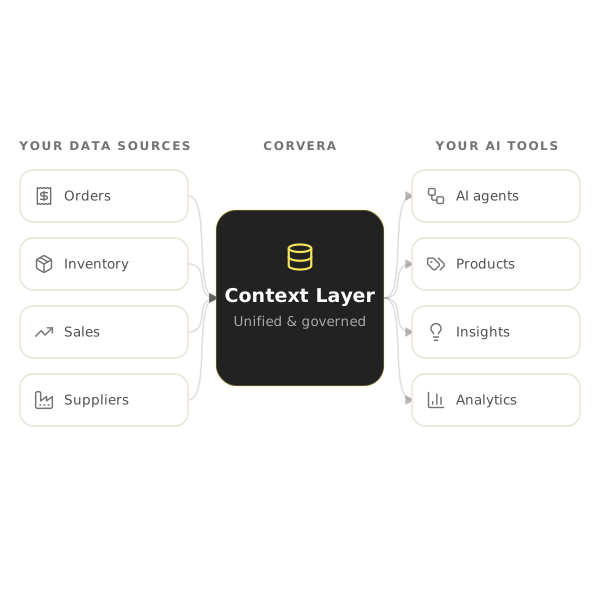
What Is a Context Layer for AI? A Guide for CPG Brands
A context layer connects your business data so AI tools can read it. Here's what that means for a CPG brand, and how it differs from a data warehouse.